
ELSI is a vibrant international research hub exploring the origin and evolution of life and planetary systems. While its scientific output is widely recognised, the personal stories, motivations, and team dynamics behind this research are often unseen. “ELSI Voices” is a storytelling initiative designed to change that. Through interviews and profile articles, the project will introduce each ELSI professor in a way that is accessible to the public, inspiring to students, and informative for collaborators. These features will showcase not only the science but also the culture, philosophy, and people who make ELSI unique.

1. Professor McGlynn, your research explores how energy flows through microbial systems—especially in harsh environments like hydrothermal vents. Could you highlight a recent project that brings this idea to life and explain why it matters?
Our research explores how living organisms obtain energy from their environment. I often think of biology as a machine that requires fuel. While plants, animals, fungi, bacteria, and archaea share many of the same building blocks, they can use remarkably different energy sources to survive and grow. Understanding these diverse strategies helps us explore both the limits of life on Earth and the possibilities for life elsewhere.
To investigate this, we study environments such as hydrothermal systems and hot springs. In Iceland, we explored the world’s only scuba-divable hydrothermal chimney, where microbes can access both geothermal energy and sunlight. In Japan, we examined iron-rich hot springs that may resemble environments on the early Earth. We found that even small amounts of hydrogen gas can strongly influence microbial communities, providing clues about what may have fuelled the earliest life on Earth and what might support life on other planets.
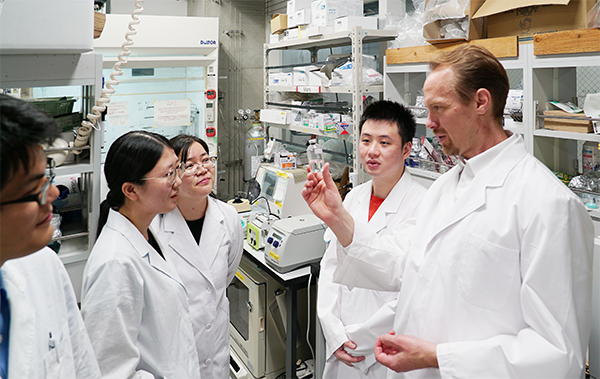
2. Your lab bridges chemistry, microbiology, and fieldwork. How do you combine experiments, natural sampling, and interdisciplinary collaboration, both within ELSI and beyond?
At the heart of my research is a simple question: how does energy flow create and maintain organisation? When I look at biology, I see a system that continuously transforms energy into order, growth, and evolution. Understanding that process requires us to study life from many different perspectives, ranging from chemistry and microbiology to geology and physics.
Collaboration is therefore essential. Some of the big scientific questions are simply too large in scope for any one person to answer alone. Throughout my career, I have been fortunate to learn from researchers with very different backgrounds. Those experiences have not made me an expert in every field, but they have taught me how to ask questions that connect different disciplines. Whether working with colleagues at ELSI, JAMSTEC, or international partners, I find that some of the most exciting discoveries emerge when people with different expertise come together to tackle a common problem.
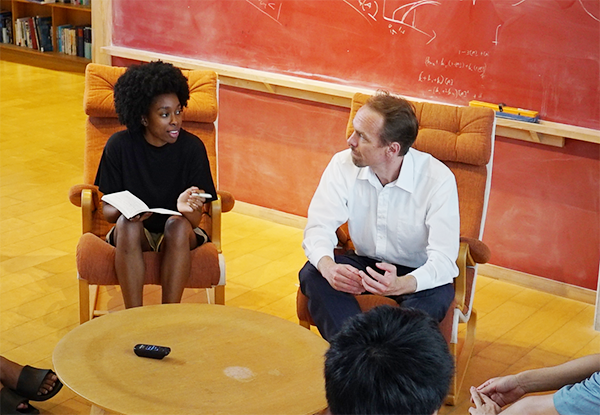
3. Hot springs in Japan serve as analogues for early Earth environments. How does your work studying microbial communities in these springs help us understand the planet’s early biosphere?
The Earth on which life first emerged is the same planet we live on today, but chemically it is very different. If we want to understand how life began, we need to study environments that resemble those ancient conditions. Fortunately, Earth still contains places where unusual chemistry persists, providing valuable windows into the past.
Japan’s hot springs are particularly useful because the country’s active geology creates environments unlike those found in most modern ecosystems. Deep underground, water interacts with rocks and becomes enriched with chemicals that may have been common on the early Earth. When this water reaches the surface, it creates habitats for unique microbial communities. These environments are not true time machines, but they may be the closest thing we have. By studying the organisms that thrive there, we can gain insights into how life may have functioned billions of years ago.
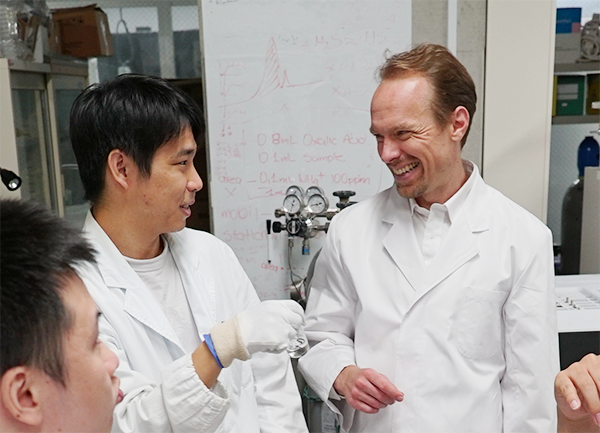
4. Stable isotopes are one of your tools for tracing ancient biochemical processes. How do your studies of sulfur isotope fractionation or enzyme energetics shed light on the emergence of life?
Life is a process, and that process is driven by metabolism—the network of chemical reactions that powers growth and survival. Many elements occur in slightly different forms known as isotopes. These isotopes behave almost identically in chemical reactions but leave subtle signatures that can be measured.
I like to think of isotopes as carrying hidden information about biological processes. The oldest evidence for life on Earth often comes from isotope patterns preserved in ancient rocks. We know life existed more than four billion years ago, but know little about these early forms or how they lived. My hope is that by understanding how modern microbes produce isotope signatures, we can better interpret these ancient records. Ultimately, this may help us reconstruct what early life was doing, what it consumed, and the environments it inhabited.

5. What do you hope prospective students know about working in your lab? How do you balance fieldwork, lab work, and theory to create a stimulating environment?
I see research as a collaborative process. Every student brings different interests, strengths, and ambitions, so I spend a great deal of time listening, discussing ideas, and helping students identify questions that genuinely excite them. I do not see the student–professor relationship as a strict hierarchy. Instead, I see it as a partnership built around curiosity and discovery.
Our research combines field expeditions, laboratory experiments, and theory. One month we might be collecting samples from a hot spring or hydrothermal system, and the next analysing data, developing experiments, or discussing the origin of life. My role is to provide guidance, but I also learn from my students every day. I still consider myself a student, and I hope our lab fosters curiosity and encourages everyone to explore new ideas together.
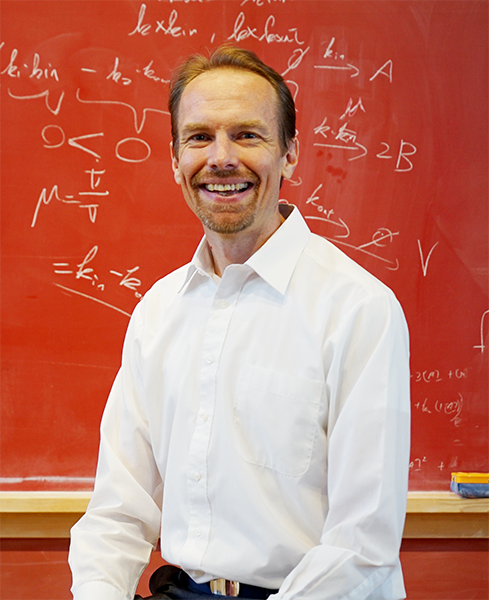
【Shawn McGlynn Profile】
Shawn McGlynn received his PhD in Chemistry and Biochemistry from Montana State University in 2010 and went on to a postdoctoral fellowship at the California Institute of Technology, where he expanded his research into geobiology and Earth-life interactions. He later held research positions in Japan and the United States before joining the Earth-Life Science Institute (ELSI), where he is currently an Associate Professor.
At ELSI, Professor McGlynn leads a research group exploring the origins of life and how microorganisms obtain and use energy in environments such as hydrothermal vents and hot springs. His team combines microbiology, geochemistry, fieldwork, and laboratory experiments to investigate the metabolic processes that sustain life in extreme environments and may have powered Earth’s earliest ecosystems. By studying how energy shapes biological systems, his research connects the origins and evolution of life on Earth with the broader search for life elsewhere in the universe.
– – –
Download the PDF version here: https://www.elsi.jp/wp-content/uploads/2026/09/ELSI-Voices-McGlynn_Lab_Final.pdf
DOI: https://doi.org/10.5281/zenodo.22760783
Shawn McGlynn home page: https://sites.google.com/elsi.jp/mcglynn/