
ELSI is a vibrant international research hub exploring the origin and evolution of life and planetary systems. While its scientific output is widely recognised, the personal stories, motivations, and team dynamics behind this research are often unseen. “ELSI Voices” is a storytelling initiative designed to change that. Through interviews and profile articles, the project will introduce each ELSI professor in a way that is accessible to the public, inspiring to students, and informative for collaborators. These features will showcase not only the science but also the culture, philosophy, and people who make ELSI unique.
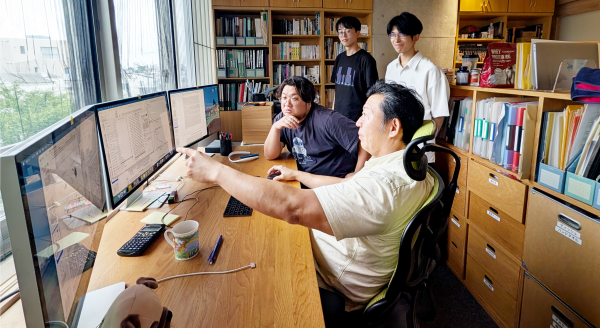
1. Your research focuses on the origins of planetary characteristics—why, for example, did Earth and Venus end up so different despite their similar size? Could you walk us through one recent project that encapsulates your approach of theory and simulation, and explain its broader implications?
Our lab studies how planets came to have the characteristics we see today. Earth and Venus, for example, are almost the same size, yet their environments are dramatically different. Earth has oceans and life, while Venus is extremely hot with a thick carbon dioxide atmosphere. We want to understand when and how such differences emerged during planetary formation and evolution. Often, our research begins with the kind of simple question a child might ask: “Why is this planet like this?”
Recently, we have been reconstructing the environment of Earth shortly after it formed, about 4.5 billion years ago. Giant impacts initially left much of the planet molten, followed by the formation of an early atmosphere and oceans. Meteorite impacts then continued to reshape its surface and chemistry. Because these planetary-scale events are difficult to be recreated in a laboratory, we reproduce them through computer simulations, or “numerical experiments.” Understanding this early environment may reveal how Earth became habitable and how common similar environments might be elsewhere in the universe.
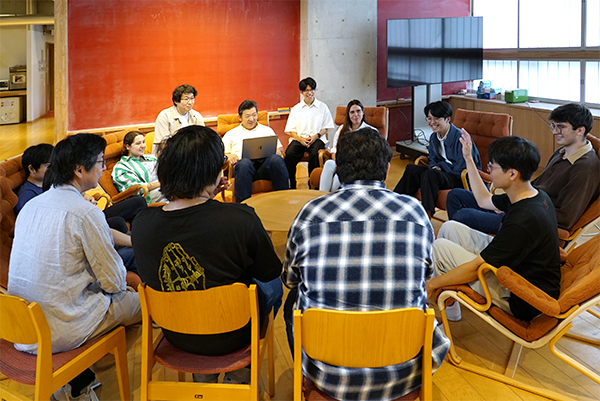
2. You combine theoretical models, computer simulations, and interdisciplinary collaboration. How do you integrate diverse methods and researchers—from impact dynamics to exoplanet discovery—and what role does your team at ELSI play in this?
A computer simulation will always produce a result, but that does not necessarily mean it represents what actually happened in nature. An important part of our work is therefore using simulations to make predictions that can be tested through observations or experiments. The reverse is also possible: experiments may reveal something unexpected, and simulations can help us understand the physical processes behind it. In this way, simulations, observations, and experiments complement one another.
Although I mainly work with simulations, collaboration with researchers using different methods is essential. ELSI brings together scientists with an extraordinary range of backgrounds and approaches, making those interactions part of everyday research. A conversation with someone from another field can reveal a perspective I would never have reached on my own, or even lead to an entirely new collaboration. This makes ELSI an especially stimulating environment for the kind of planetary science I want to pursue.
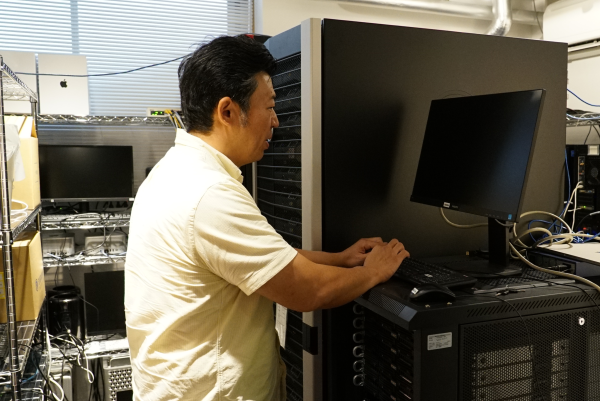
3. Many of your studies help us understand how unique or universal Earth’s features are in the broader universe. For future-minded students, how is your lab structured to train them in thinking about planets as evolving systems, not just static worlds?
In our lab, we look at planets from an evolutionary perspective. Rather than simply asking what a planet is like today, we ask, “Why is it in this state now?” Understanding its atmosphere, interior, or surface means considering its formation, the impacts it experienced, internal changes, and how its atmosphere was gained or lost as one continuous history.
I encourage students to think beyond a single speciality. They do not need to become experts in every field, but they should understand where their research fits into the planet’s wider history. When discussing results, I might ask, “What stage of planetary evolution does this relate to?” or “What observations could test this idea?” By moving between theory, simulations, observations, and exploration data, I want students to see planets not as static objects, but as systems that have changed over billions of years.
4. Looking ahead, what major questions does your lab hope to tackle in planetary evolution and habitability, and what challenges lie ahead?
Planetary exploration is giving us increasingly detailed information about other worlds, from their composition and internal structure to samples brought back to Earth. The challenge is to connect these pieces of evidence into a coherent story of how a planet formed and evolved. I would like our lab to become a kind of “storyteller” in planetary science.
Upcoming exploration offers exciting opportunities. JAXA’s Martian Moons eXploration (MMX) mission could reveal both the origin of the Martian moons and the history of Mars. Venus raises another question: did it once have oceans like Earth, and when did their evolutionary paths diverge? Through simulations, we can map possible histories and predict what future missions might observe. Testing these predictions against exploration data can help us understand how habitable environments emerge, persist, or disappear.
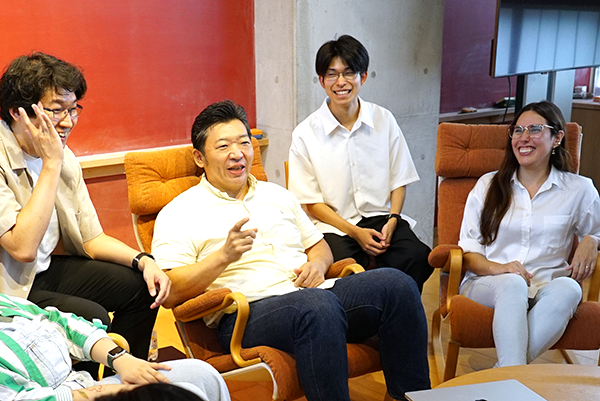
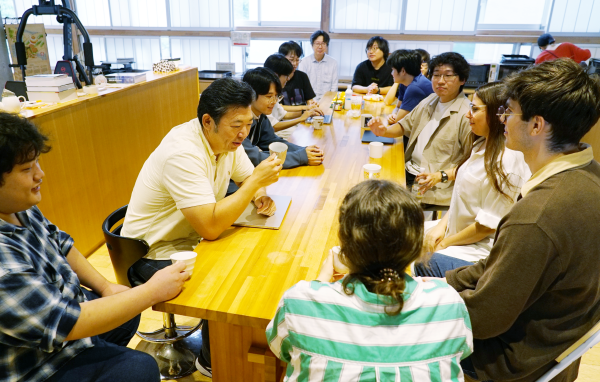
5. How do you encourage students to ask bold questions, challenge assumptions, and pursue independent research while contributing to the wider lab?
I believe the most important thing in research is curiosity. Good research often begins with a simple question: “Why?” Even something a child might ask can become a serious scientific question if nobody knows the answer. Finding that answer is not always glamorous. Much of our work involves programming, debugging, and checking results. What keeps us going is wanting to know.
For that reason, I do not simply assign research topics to students. Through discussion, I encourage them to find questions they want to pursue and challenge assumptions by asking, “Is that really true?” Independence does not mean working alone. Students discuss code, results, and ideas with one another, even when their projects differ. I want each student to develop as an independent researcher while supporting others and creating new science together.
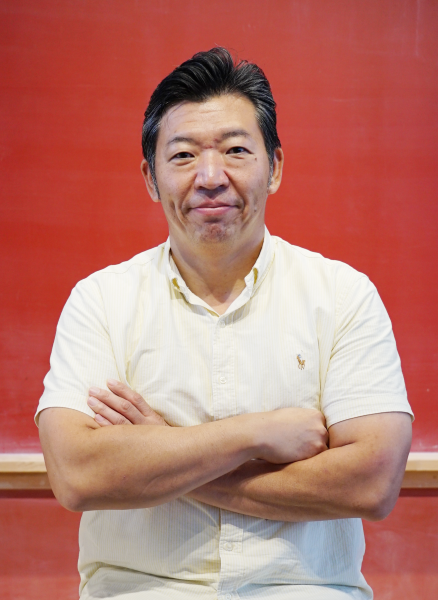
【Hidenori Genda Profile】
Hidenori Genda received his Doctor of Science from the University of Tokyo in 2004 and went on to a postdoctoral fellowship at Tokyo Institute of Technology. He later held research and academic positions at Tokyo Institute of Technology and the University of Tokyo before joining the Earth-Life Science Institute (ELSI) in 2013 as a Project Associate Professor. He became a Principal Investigator in 2018 and is currently a Professor at ELSI.
At ELSI, Professor Genda leads a research group investigating how planets form, evolve, and develop their distinctive characteristics. Using theory and computer simulations, his team explores questions ranging from the origins of Earth’s oceans and atmosphere to giant impacts, planetary habitability, and the diversity of worlds beyond our Solar System. By connecting simulations with observations, experiments, and planetary exploration, his research seeks to understand why Earth became a habitable planet and how common similar environments might be elsewhere in the universe.
– – –
Download the PDF version here: https://www.elsi.jp/wp-content/uploads/2026/10/ELSI-Voices-Genda_Lab_Final.pdf
DOI: https://doi.org/10.5281/zenodo.23681395
Hidenori Genda web page: https://members.elsi.jp/~genda/index.html